




An Earth station antenna is a critical component of satellite communication systems, enabling bidirectional radio communication between satellites and terrestrial networks. They are essential in broadcasting, navigation, remote sensing, and scientific missions.
Definition of an Earth Station Antenna
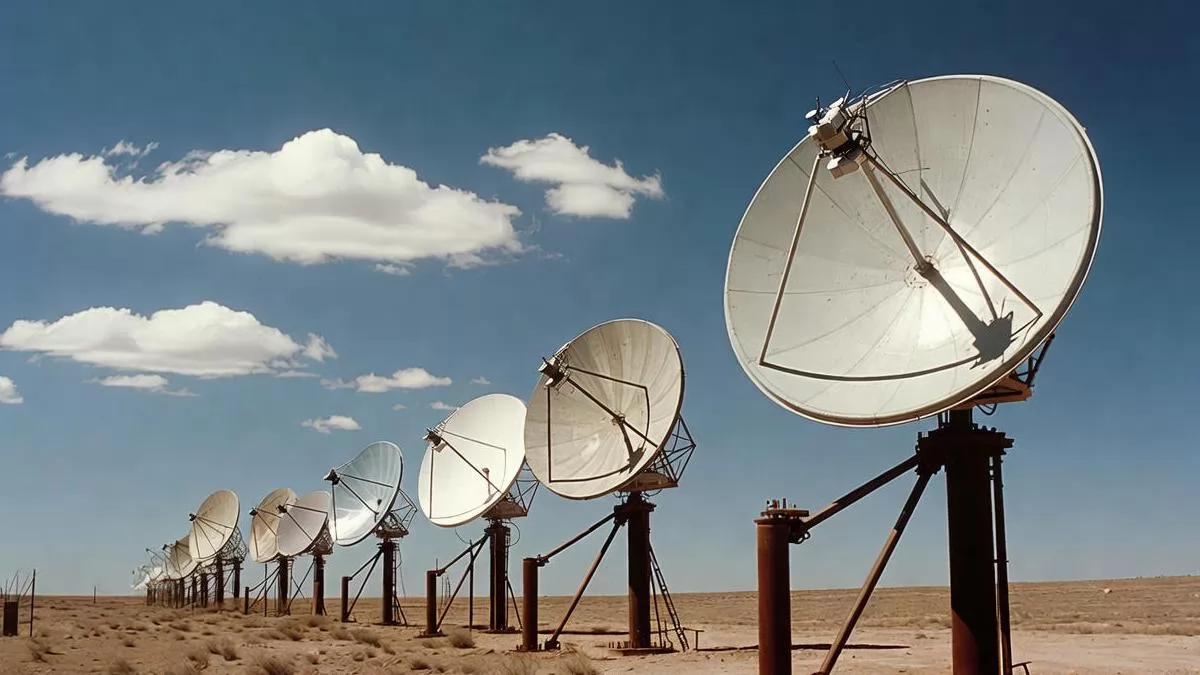
An Earth station antenna, also called a satellite antenna, receives and transmits signals to satellites in geostationary (GEO), low Earth orbit (LEO), and medium Earth orbit (MEO). It acts as the interface between ground equipment and satellite networks, converting radio frequency signals into usable data and vice versa.
Key Features
- High Gain: Strong signal reception over long distances.
- Precision Tracking: Ability to follow moving satellites.
- Frequency Coverage: Supports multiple bands (C, Ku, Ka, X).
- Polarization: Linear or circular polarization for signal quality.
- Environmental Protection: Weatherproof radomes or enclosures.
- Automation & Control: Remote monitoring and tracking systems.
Sizes of Earth Station Antennas
_1766026200_WNo_1224d689.webp)
Sizes vary depending on mission requirements:
- Small: 0.9–3 meters, used for VSAT, remote offices, mobile terminals.
- Medium: 3–10 meters, used for regional broadcast, government, and data centers.
- Large: 10–30+ meters, used for deep-space missions and high-throughput satellites.
Installation Types
Earth station antennas can be installed in various configurations depending on mobility and environment:
- Fixed Ground Installations: Permanent installations with concrete foundations.
- Transportable Platforms: Trailer-mounted or modular units for rapid deployment.
- Maritime Installations: Shipborne stabilized antennas for sea operation.
- Roof-top or Building-mounted: Smaller antennas for commercial or urban applications.
Applications
- Satellite Communication: Telemetry, tracking, command, and data transfer.
- Broadcasting: TV and radio uplinks.
- Earth Observation: Remote sensing data reception.
- Navigation: GNSS support and monitoring.
- Defense & Military: Secure communications and intelligence.
Comparison by Size and Use
| Size | Typical Diameter | Applications | Advantages |
|---|---|---|---|
| Small | 0.9–3 m | VSAT, remote offices, mobile terminals | Low cost, quick deployment, mobile |
| Medium | 3–10 m | Regional broadcast, government, data centers | Balance of gain, reliability, cost |
| Large | 10–30+ m | Deep-space, scientific missions, high-throughput satellites | High gain, long-range, high data rate |
Future Trends
- Virtualized and cloud-based ground station networks.
- Software-defined antennas with automated tracking.
- Integration with multi-orbit satellite constellations.
- Compact high-gain antennas for small satellite terminals.
FAQs
What is an Earth station antenna?
A ground-based antenna that communicates with satellites for data transmission, telemetry, and control.
How are Earth station antennas classified by size?
They are classified as small (0.9–3 m), medium (3–10 m), or large (10–30+ m) depending on gain and application.
Can Earth station antennas be mobile?
Yes, transportable and maritime-mounted antennas allow satellite communication in remote or moving environments.
Conclusion
Earth station antennas are essential components of satellite systems, with various sizes, features, and installation types tailored to mission requirements. From small VSAT terminals to large deep-space antennas, selecting the right antenna ensures reliable communication and data transfer.
By understanding the key features, applications, and trends of Earth station antennas, operators can make informed decisions to optimize satellite ground segment performance.
For operators and system integrators seeking practical solutions, NewStar provides engineering-driven Earth station antenna services, including design, deployment, and maintenance. Their expertise ensures reliable communication across small, medium, and large antennas for satellite, maritime, and deep-space missions.