



Ground stations form the essential link between satellites in orbit and terrestrial communication, control, and data networks. From satellite communications and Earth observation to navigation and scientific missions, ground stations enable reliable data exchange across vast distances.
What Is a Ground Station?
A ground station is a terrestrial facility designed to transmit, receive, process, and route radio-frequency signals to and from satellites. It acts as the physical and logical interface between space-based systems and users on Earth.
Unlike consumer satellite terminals, professional ground stations are engineered for high reliability, precise antenna tracking, low-noise reception, and continuous operation under strict regulatory constraints.
Core Components of Ground Stations
1. Antenna System
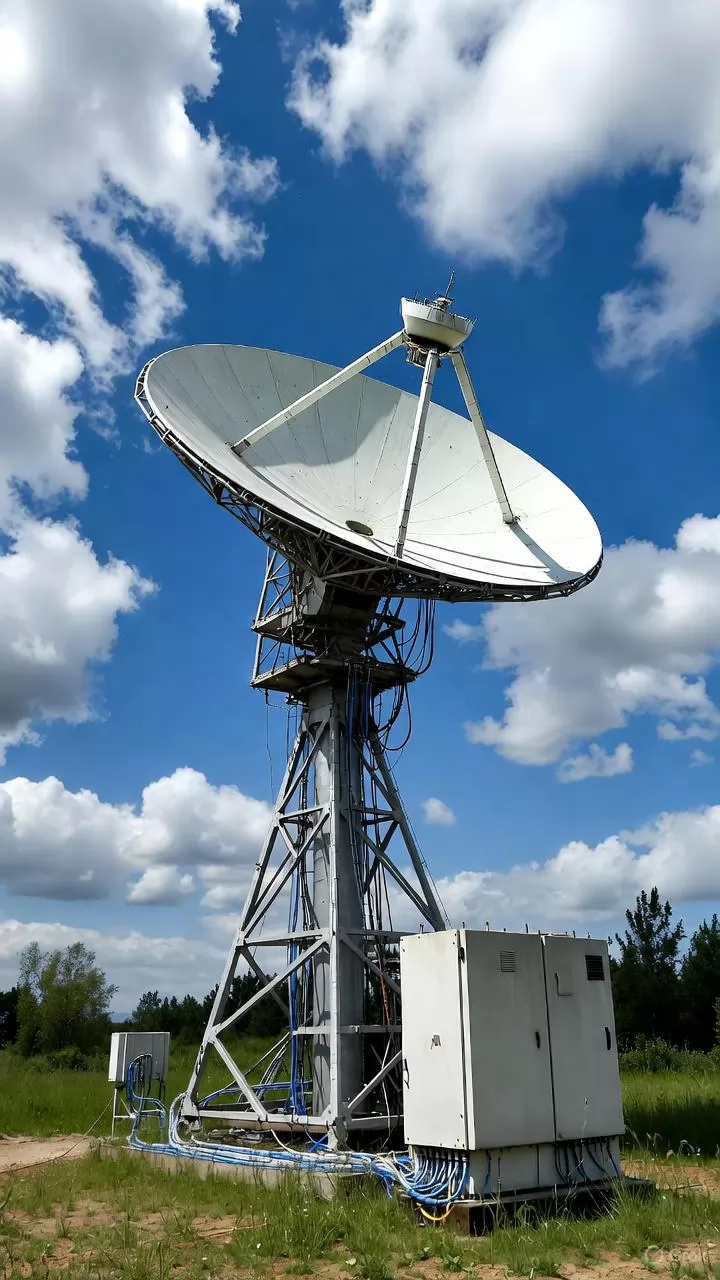
The antenna system determines how effectively a ground station can transmit and receive satellite signals. Its design directly impacts link margin, data throughput, and overall system availability.
- Parabolic dish or phased-array configuration
- Antenna diameter and gain
- Polarization type (linear or circular)
- Radome protection for harsh environments
2. RF Front-End
The RF front-end conditions signals before and after digital processing. This stage plays a critical role in preserving signal quality.
- LNA (Low Noise Amplifier) – Amplifies weak downlink signals
- BUC (Block Upconverter) – Converts IF signals for uplink
- Filters and duplexers – Prevent interference and isolate bands
3. Tracking and Control System
Satellites, especially in low Earth orbit, move rapidly relative to the ground. The tracking system ensures the antenna remains accurately pointed throughout each pass.
4. Baseband and Signal Processing
Baseband equipment converts RF signals into digital data streams and applies modulation, coding, synchronization, and encryption.
Modern ground stations increasingly rely on software-defined radio platforms to support multiple waveforms and evolving mission requirements.
5. Network and Data Interface
After processing, data is routed to mission control centers, cloud platforms, or end-user applications through secure terrestrial networks.
Ground Station Architecture Models
- Single Station: Cost-effective solution for regional coverage and limited missions.
- Distributed Network: Multiple stations provide near-global coverage and redundancy.
- Cloud-Integrated: Combines physical RF infrastructure with virtualized processing.
End-to-End Signal Flow
- Satellite transmits RF signal toward Earth
- Ground station antenna receives the signal
- LNA amplifies the low-power signal
- Downconversion to IF or baseband
- Demodulation and decoding
- Data routed to control systems or users
- Uplink commands follow the reverse path
Common Ground Station Use Cases
- Satellite communication gateways
- Earth observation data downlink
- Maritime and aviation connectivity
- Defense and secure communications
- Scientific and deep-space missions
How to Choose the Right Ground Station
- Operating frequency band
- Orbit type and coverage requirements
- Data rate and latency targets
- Scalability and future upgrade paths
Operational Risks and Challenges
Ground station operations face technical and environmental challenges including RF interference, weather-related attenuation, mechanical wear, and cybersecurity threats.
Frequently Asked Questions
Q: What is the difference between a ground station and a satellite terminal?
A: A ground station is a high-performance infrastructure node designed for continuous operation, while satellite terminals are typically end-user devices with limited tracking and power capability.
Ground StationQ: How many ground stations are required for a LEO constellation?
A: The number depends on orbit parameters and latency requirements, but global coverage often requires dozens of strategically located stations.
LEO ConstellationQ: Why are higher frequency bands more challenging?
A: Higher frequencies provide greater bandwidth but are more sensitive to atmospheric loss, pointing accuracy, and hardware tolerances.
Frequency Band
Conclusion
In summary, satellite ground stations remain a cornerstone of modern space-based communications, evolving rapidly to meet the demands of LEO constellations, high-throughput satellites, and secure global networks. Their sophisticated components, flexible architectures, and precise signal handling enable critical applications—from real-time Earth observation and disaster response to broadband delivery in remote regions and mission-critical scientific research.
For organizations seeking reliable, high-performance satellite communication solutions, partnering with an experienced provider ensures seamless integration, optimal performance, and long-term scalability. At NewStar Antenna, we specialize in the design, manufacturing, and deployment of advanced ground station antennas and complete Earth station systems. Whether you need custom parabolic dishes, phased-array solutions, or full turnkey installations, our team delivers tailored, high-quality systems backed by comprehensive support—from initial consulting and system integration to installation, commissioning, and ongoing maintenance.
Contact us today at https://www.vastantenna.com/contact/ to discuss how we can support your satellite communication projects with proven expertise and cutting-edge technology.